

Introduction
Celebrations used to mean guessing games. You'd wrap the wrong thing twice, unwrap three similar sets of towels, or spend weeks trying to remember who got what when thank-you notes landed in your inbox. A gift registry changed that equation by putting control back where it belongs—with you.
At its core, a gift registry solves three problems at once: duplicates disappear, guests stop second-guessing their choices, and you walk away with items you'll actually use daily instead of decor that gathers dust. The modern version takes it further by letting you add gifts from any online store to one list.
This guide explains what a gift registry app or website really does in 2026, who typically uses one, when the best time is to create yours, how universal registries compare to store-specific options, and what mistakes make the biggest difference to avoid. You'll also see where ListedGifts fits if you want something free without retailer limits.

Create your Gift
Registry in minutes
Add everything from Amazon, Target, BestBuy or any online stores
all in one place
What Is a Gift Registry? A Simple Definition
When someone asks you what a gift registry is, keep the answer direct: it's an online list of items you want as gifts. You build that list, share a link with guests, and they purchase directly from those choices. Nothing disappears into guesswork anymore. The platform handles tracking so you know exactly what was received and what's still available.
Originally created for weddings and baby showers, gift registries now serve birthdays, graduations, housewarmings, anniversaries, holidays, and nearly any celebration where people want to give something meaningful without confusion. The mechanics stay consistent across occasions: create your list, invite guests to view it, let them choose what fits their budget.
Quick definition
A gift registry app or website is a digital list where you add items you want as gifts, share it with guests through a single link, and they purchase directly. No duplicates, no guessing, no confusion.
Core features every good registry should have
- Create a free account — Sign up quickly without hidden fees or mandatory upgrades.
- Add items easily — Drag-and-drop, manual entry, or one-click browser extension while shopping.
- Share through one link — One URL stays current as you add new items throughout the planning process.
- Track gifts in real time — Know instantly what's been purchased and what remains available.
- Support multiple price points — Guests can choose within their budget without awkwardness.
- Mobile-friendly design — Most guests will access your registry on phones, not desktops.
What makes modern registries different
The biggest shift in 2026 isn't that registries exist—retailers have offered them for decades. It's that you no longer need to limit yourself to one store. A universal gift registry lets you pull items from anywhere online into a single list, giving you full control over what enters your home.
This matters because different guests prefer different stores. Your aunt loves Target deals. Your colleague shops exclusively at Amazon for Prime shipping. That friend abroad needs international options. When you lock yourself to one retailer, some of those people lose easy ways to participate in your celebration.
Complete choice
Add items from any online store in one place.
No hidden costs
Truly free registries without sneaky fees.
Works everywhere
Phone, tablet, desktop—guests use what they want.
Flexible timing
Create anytime, add items as you discover them.

Who Should Use a Gift Registry?
The short answer: almost anyone celebrating with friends and family. But let's get specific because knowing whether you should create one depends on your situation, guest list size, and what would actually make gift-giving easier for everyone involved.
Traditional occasions where registries are standard
- Weddings — The most common use case. Couples register for home essentials, upgrades, experiences, and items that build their life together. Most guests expect a registry link to be available.
- Baby showers — Parents-to-be list everything from diapers and clothing to baby monitors and nursery furniture. Friends and family love knowing exactly what's needed.
- Bridal showers — A smaller version of wedding registries, often focused on kitchen items, home decor, or personal care products the bride will enjoy daily.
Newer occasions gaining traction
Modern celebrations have expanded far beyond weddings and babies. Birthdays—especially milestone ages like 18th, 21st, 30th, 40th—now commonly use registries. Adults who already own basic household items still need upgrades, replacements, or special pieces they've been eyeing for their birthday.
- Birthday registries — For ages 21, 30, 40, and beyond. People receive thoughtful gifts without you having to ask repeatedly what you want.
- Graduation registries — College and grad school graduates often need furniture, appliances for their first apartment, or professional gear for their career start.
- Housewarming registries — New homeowners frequently use registries to gather what's missing in the empty house while giving guests a clear way to contribute.
- Anniversary registries — Couples celebrate with registry items for home upgrades, date nights, or shared experiences they've discussed wanting together.
- Holiday registries — Some families use registries for Christmas or holiday seasons to streamline gift exchanges and reduce duplicates among family members.
When a registry actually helps more than it complicates things
Registries work best when you have multiple people who want to give gifts. If just one or two friends are buying presents, a registry might feel unnecessary overhead. But for larger celebrations with 20+ guests, the organization pays dividends quickly.
Good registry situations
- • 20 or more invited guests
- • Multiple people shopping from different locations
- • You want specific items instead of random gifts
- • You're starting a household (wedding, new home, baby)
- • Guests have asked what you'd like
If you fit any of these situations, creating a gift registry makes life simpler for everyone. It removes the pressure of guests trying to guess your taste or budget while giving you control over what enters your space.
For couples building a home together after getting engaged, see the complete wedding registry checklist with room-by-room item suggestions. Expectant parents can find guidance on setting up baby registries that let them add items from any store.
When Should You Create a Gift Registry?
Timing affects everything. Too early and you might forget to update it or lose excitement before the event. Too late and guests scramble for last-minute options or buy duplicates because they couldn't find your list in time. The sweet spot depends on what occasion you're celebrating.
Wedding registries: 6–9 months before the wedding
Start your registry about half a year to nine months before the ceremony date. This timing lets you add items thoughtfully as you browse stores, gives guests enough lead time for planning, and ensures your list is ready when engagement parties or bridal showers happen.
- 6–9 months out — Create the account and add core essentials: kitchen basics, bedding, everyday items.
- 4–6 months out — Share the link on invitations or wedding website so guests can start shopping early.
- 2–3 months out — Fill in gaps based on what's already been purchased and add upgrades you're considering.
- 1 month before — Final check for anything still missing or last-minute additions.
Baby registries: 20–30 weeks into pregnancy
For baby showers, aim to have your registry complete around 24–28 weeks into pregnancy. This aligns with most shower timing (typically between 27 and 31 weeks) and gives parents enough time to shop without stress while still feeling connected to the excitement of upcoming arrival.
Birthday and housewarming registries: 4–8 weeks before
These celebrations need less lead time since they're more flexible. Create your registry one month out minimum, though two months is better if you want a robust list with lots of variety for different guest budgets. Share the link when you send invitations so people can purchase at their convenience.
Graduation and other milestone events: 8–12 weeks before
Similar to birthdays, start your registry two months out. Graduates often need items for their first real apartment, car accessories, professional wardrobe pieces, or technology they'll use in their new career. The extra time lets you add thoughtful options as you discover what would genuinely help in the next chapter.
Pro tip: Don't wait too long
Starting your registry early creates momentum. As you add items thoughtfully, you'll discover things you genuinely want rather than just filling space to make the list look complete. Guests appreciate having plenty of time to find exactly what fits their budget and shipping needs.
If you're not sure when to share your registry or how to do it politely, check our guide on how to share a gift registry for wording templates that feel natural.
Store-Specific vs Universal Registries: Key Differences
This decision shapes your entire registry experience. Store-specific registries tie you to one retailer's catalog, while universal options let you pull items from anywhere online into a single list. Understanding the tradeoffs matters because you'll make this choice before adding any items.
Store-specific registries: what they are
Major retailers like Target, Amazon, and department stores offer free registries on their platforms. You create an account within their system, add items from their inventory, and share that list. Guests purchase directly through that retailer's website, so the platform handles payment, shipping, and tracking automatically.
Advantages of store-specific registries
- Seamless checkout process — Guests buy from a familiar retailer they may already have accounts with.
- Built-in rewards programs — Many stores offer completion discounts, registry bonuses, or free gifts when you reach spending thresholds.
- Easy returns and exchanges — If items need replacing, the same store handles it without coordinating multiple vendors.
- No technical complexity — Everyone knows how to navigate Amazon or Target; no learning curve for guests.
Limitations of store-specific registries
The constraint runs both ways. You can only choose what that one store stocks, which means your list becomes whatever inventory happened to exist at launch time. If a particular item sells out before the event, it may stay unavailable with no easy replacement option unless you find something similar on their site.
- Limited selection — You're stuck with that retailer's product range, which might not include what you actually want.
- Price point constraints — Some stores skew toward budget options; others focus on premium items, limiting guest choice across budgets.
- Guest preference mismatch — Your college friend uses Amazon exclusively for Prime shipping. That aunt loves Target deals. Neither wants to navigate your Bed Bath & Beyond registry.
- Inflexible updates — If you fall in love with something at another store, adding it means either buying separately or starting a second registry.
Universal registries: what they are
Universal registries remove the single-store limitation entirely. You create one account on a platform like ListedGifts, then add items from any online store you visit. The registry itself becomes your centralized list while purchases happen through various retailers where those products live. This approach keeps all choices in one place without forcing anyone into one catalog.
Advantages of universal registries
- Total product freedom — Add anything from any store. Found something at a boutique you love? Include it. A specialty retailer with items your wedding registry needs? Add those too.
- Genuine choice for guests — Different people shop different stores. Universal registries let everyone participate where they're comfortable instead of forcing adaptation to one platform they may dislike or find confusing.
- No inventory anxiety — Items going out of stock at one store doesn't strand your list; you can add alternatives from elsewhere instantly.
- Better price range coverage — Budget-friendly options from discount retailers, premium choices from luxury stores, everything sits together naturally.
- Merge with existing lists — Already have registries at multiple stores? You can consolidate them or let them coexist while maintaining one primary link for guests.
Tradeoffs of universal registries
The main difference: guests may complete checkout on different platforms depending on where each item lives. This adds slight complexity versus a single-store registry where all transactions happen in one familiar system. However, most people navigate online shopping regularly anyway, so this rarely creates real friction in practice.
Store-specific registry
- Simple checkout process
- Store rewards and bonuses
- Limited to one catalog
- Inventory constraints apply
Universal registry
- Any store, any item
- Guests shop their preferred stores
- Always up to date inventory
- Better price range options
If you're still deciding, read more about why choosing an online universal gift registry makes sense in our detailed comparison guide. The answer often comes down to whether having total control over your list matters more than the simplest checkout flow for guests.
How a Gift Registry Works: Step-by-Step
The mechanics are straightforward once you understand the flow. Create your account, build your list, share it with guests, track what they purchase. That's the entire process broken into digestible steps that take minutes rather than hours to complete.
Step 1: Choose a registry platform
This is your first decision point. You can stick with one retailer or opt for a universal registry service. Both work, but they create different experiences for you and your guests. If store flexibility matters to you, platforms that let you add items from anywhere online eliminate the need to maintain multiple separate lists.
Decision factors
- • How much product choice do you want?
- • Do guests have strong store preferences?
- • Is free registration important or are rewards bonuses a priority?
- • Will you need to add items from multiple stores later?
Step 2: Create your account
Most registries take 2–3 minutes to set up. Enter your name, email, and occasion type. Some platforms ask additional details like wedding date or due date for baby showers. Keep this information clear because guests may reference it when shopping for you.
Step 3: Add items to your registry
This is where the real work happens, but it shouldn't feel like labor. Browse stores—whether one or many—and add things you genuinely want. Be specific about colors, sizes, and quantities if the platform allows customization. Aim for variety across price points so guests can choose comfortably within their budgets.
Step 4: Share your registry link
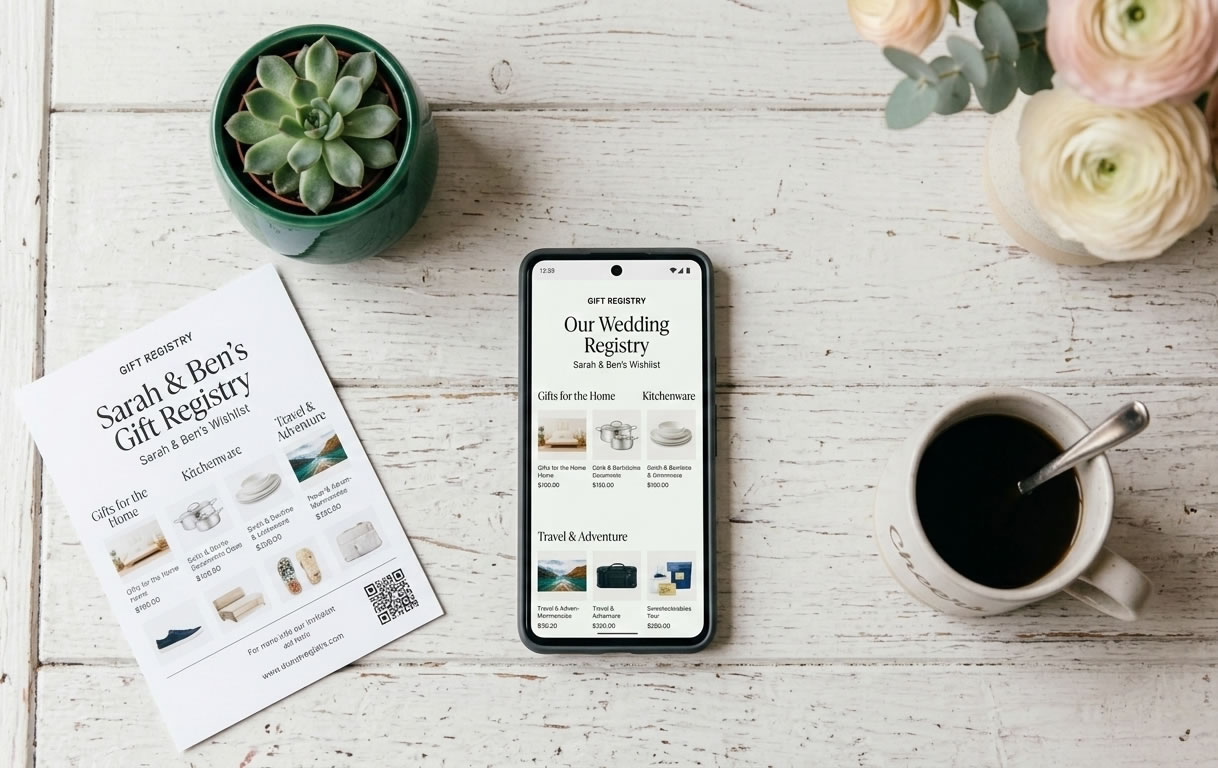
One URL covers everything. Place it on wedding websites, shower invitations, or send directly to friends asking what you'd like. The beauty of modern registries is that this single link stays current as you add new items throughout planning, so early guests and late shoppers both see the same up-to-date list.
Step 5: Track what's purchased
As guests buy items, they disappear from your visible list in real time. You receive notifications for each purchase with buyer details (if they choose to share) so thank-you notes can reference specific gifts later. The system automatically handles duplicates by marking items as unavailable once purchased, preventing two people from buying the same thing.
Step 6: Handle post-event follow-up
Most registries let you mark additional purchases that came in outside the system. This is important for handwritten notes or gifts brought directly to events that weren't on your list. Keep this organized alongside tracked registry items so nothing gets overlooked when writing thank-you messages.
Need help getting started? The process of creating a gift registry is super easy. Follow the steps above and you'll have your list ready in under 10 minutes.
Common Mistakes When Creating a Gift Registry
Even with good intentions, registries can go wrong when basic principles get overlooked. These mistakes show up repeatedly across couples and celebrations, usually because people don't realize what guests actually need or expect from the process. Avoiding them makes everything smoother for everyone involved.
Mistake #1: Not including enough price variety
If every item on your list costs $150+, half your guests can't participate comfortably. Budget constraints are real, and forcing people to stretch beyond their means creates awkwardness that defeats the purpose of gift-giving. A balanced registry has options under $50 for individual shoppers, $50–$100 for comfortable middle ground, and higher-end pieces for those who want group gifts or splurges.
Mistake #2: Making the list too small
With 50 guests invited but only 20 items listed, popular choices vanish within hours of your announcement. Guests then face empty lists and scramble for alternatives or feel pressured to buy something you didn't actually want. A good rule: aim for 2–3 times more items than expected gift-givers. This guarantees real choice throughout the shopping period.
Mistake #3: Waiting too long to create and share
Starting your registry two weeks before the event gives guests barely enough time to order, ship, and wrap gifts in stressful last-minute fashion. People plan ahead when they can. Early sharing lets them purchase at their pace, find exactly what fits their budget, or coordinate group gifts with friends who want to pool resources for bigger items.
Mistake #4: Limiting yourself to one store
Locking your list to a single retailer creates blind spots. What if the best version of something you want exists elsewhere? What if a guest's preferred store doesn't match yours? Universal registries solve this by letting you include anything from anywhere, which removes these artificial constraints entirely.
Mistake #5: Adding items you won't genuinely use
Filling space just to make the registry look complete backfires when you receive dozens of things you'll never touch. Every item should pass this test: will I actually enjoy or use this regularly? If not, skip it even if it's tempting to add something generic that looks good on paper but won't enhance daily life.
Mistake #6: Forgetting to update inventory
Life happens—items sell out at stores, links break, new products appear. A registry left stagnant for months ends up with dead links or unavailable options that frustrate guests trying to participate. Check in regularly and remove broken items or replace them with alternatives as you discover them.
Mistake #7: Not testing the guest experience
You might not notice friction points until someone else encounters them. Have a friend view your registry from their perspective on phone and desktop. See if links work, if items display clearly, if checkout processes make sense to someone unfamiliar with your platform choice. Fix problems before the invitation goes out.
Quick checklist to avoid mistakes
- Price points range from $20–$500+ across the list
- Total items exceed expected gift-givers by 2–3x
- Created and shared at least 4 weeks before event
- Multiple stores represented if using universal registry
- Every item genuinely appeals to you
- Links tested on both mobile and desktop devices
If you're starting fresh or considering switching from a store registry to something more flexible, listed gifts like ListedGifts offers free gift registries that let you add items from any online store. You keep complete control without paying for the privilege of choice.
FAQ: Questions About Gift Registries
What is a gift registry and how does it work?
A gift registry is an online list where you select items you want as gifts, share the link with people celebrating with you, and they purchase directly from your choices. The platform tracks what's been bought so nothing gets duplicated and guests know exactly what you'd appreciate receiving.
Who uses gift registries?
Originally created for weddings and baby showers, modern registries now work for birthdays, graduations, housewarmings, anniversaries, holidays, and virtually any celebration where multiple people want to give gifts. Anyone who wants thoughtful presents without guessing games can benefit from creating a registry list.
When should I create my gift registry?
For weddings, start 6–9 months before the date. Baby registries work best at 20–30 weeks into pregnancy when showers typically happen. Birthdays and housewarmings need at least one month of advance creation time so guests can shop comfortably without rushing last-minute purchases.
What's the difference between a store registry and universal registry?
Store registries limit you to one retailer's inventory. Universal registries let you add items from any online store into one centralized list, giving you complete freedom while guests still have flexibility to shop where they prefer most.
How do I share my gift registry with guests?
Include the link on your event website, send it privately when people ask what you'd like, or add it subtly to invitations if appropriate for your culture and relationship. Never pressure anyone—some prefer cash gifts or have different traditions—and let them choose how to participate comfortably.
Is there a free gift registry option?
Yes, several platforms offer completely free registries with no hidden fees or required upgrades. Look for ones without store limitations if you want flexibility to add items from anywhere online rather than being locked into one catalog's selection and price ranges.
How many items should I put on my registry?
Aim for 2–3 times more items than expected gift-givers. This creates real choice even after popular options sell out, prevents last-minute scrambling when lists run low, and accommodates different guest budgets throughout the shopping period before your event date arrives.
What if guests prefer to give cash instead?
Many couples and individuals now offer both options: physical gifts on their registry plus gift cards or fund contributions for experiences like honeymoons, home purchases, or future plans. This flexibility respects guest preferences while still providing clear guidance about how to participate meaningfully in your celebration.
Ready to create your gift registry?
Your celebration deserves gifts that fit your life, not random items chosen by guesswork. Start with a free registry that lets you add from any online store, keep control over what enters your home, and give guests real choice across their preferred shopping destinations.
Suggested next reads
View allWhy Choose a Universal Gift Registry
Learn why universal registries beat single-store options for flexibility and guest experience.
How to Share a Gift Registry
Templates and advice for sharing your registry link politely on invitations and websites.
When to Create Your Wedding Registry: Complete Timeline
A complete timeline for your wedding registry: exactly when to start, what to share with guests at each step.
How to Create a Free Gift Registry
Step-by-step setup guide for building your first registry in minutes.
Best Universal Gift Registry Websites
Best Universal Gift Registry Websites to Add Gifts from Any Store (2026 Guide)
ListedGifts Apps, Extensions & Add-Gift Tools
Explore Chrome, Safari, Android, the Browser Button, product-link adding, imports, sharing, privacy and more.